The 10 best tools to find carbon credit buyers (2026)
Estimated reading time: 16 minutes
Carbon buyer data has never been this good. AlliedOffsets tracks more than 28,000 corporate buyer profiles across 30-plus registries. Sylvera's Buyer Directory covers 39,000 retirees, filterable by sector, vintage, and geography. MSCI models future credit demand for over 5,000 companies.
Most sellers holding one of those subscriptions still book meetings the same way they did three years ago: by hand, one account at a time, in the hours left over after project development and proposals.
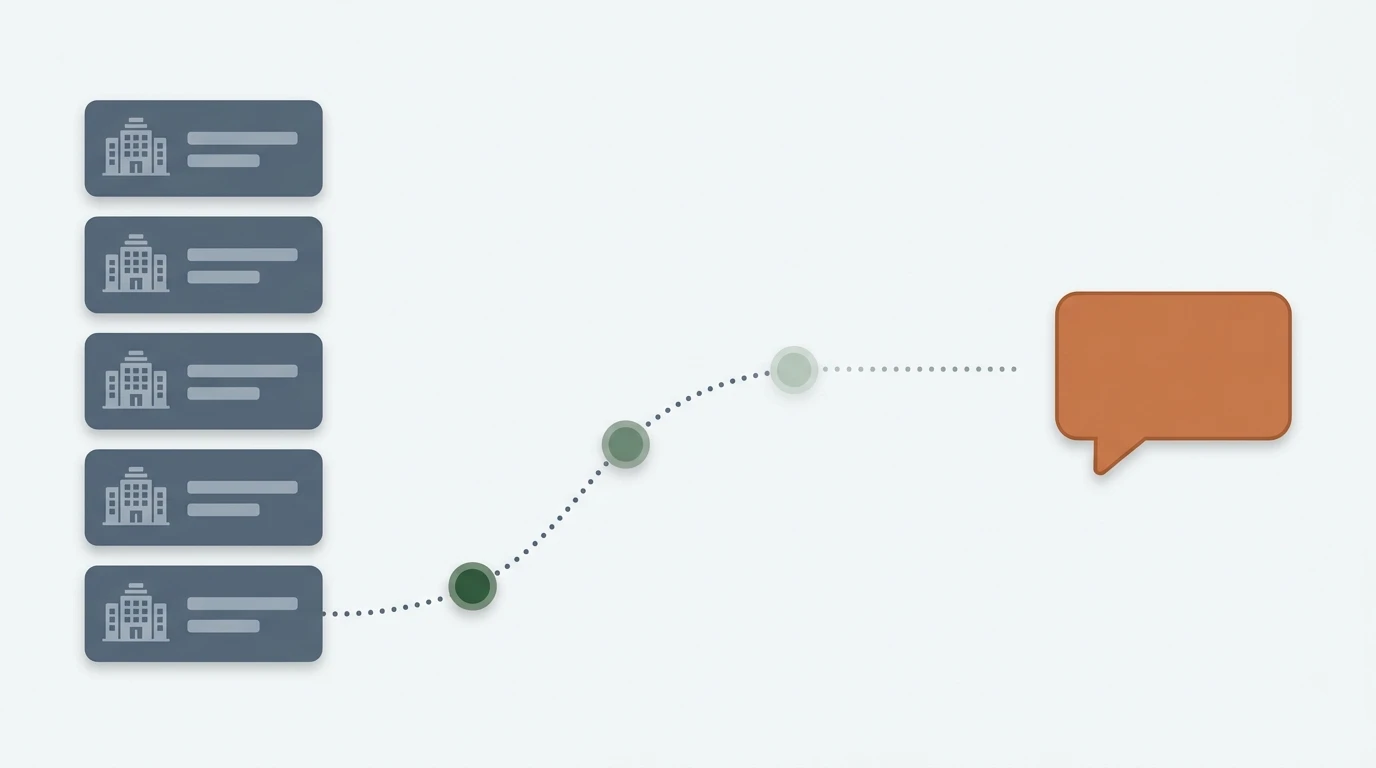
What these platforms produce is a list of companies, and the list is maybe a fifth of the work between a signal and a conversation. The rest is a last-mile problem, and it's the part a five-person carbon team can't staff.
Disclosure before the ranking: Emitree is our product and it sits first, for one scoped scenario. Several tools below are ones our own clients pay for, and we regularly build campaigns on lists their platforms produced. Each gets an honest lane, including the cases where it's the better buy.
| # | Tool | Best at | What you have when it's done | Entry pricing (verified Aug 2026) |
|---|---|---|---|---|
| 1 | Emitree | Turning buyer signals into booked conversations | Sent multichannel campaigns, replies, CRM records | Custom, pilot-first |
| 2 | AlliedOffsets | Depth of retirement and buyer data | A filtered list of companies | Not published, enterprise |
| 3 | Sylvera | Ratings plus buyer behavior, and being found | A filtered list, plus marketplace exposure | Not published; free developer tier |
| 4 | MSCI Carbon Markets | Modeling where demand goes next | Forecasts and analysis | Institutional data license |
| 5 | CDR.fyi | Durable removal purchases and who made them | Leaderboards and deal records | Free tier, paid Portal |
| 6 | Abatable | Procurement pricing and live buyer RFPs | Benchmarks, forward curves, RFP responses | Not published |
| 7 | Sales Navigator | Reaching people on the channel they answer | Saved searches, alerts, InMails you send | $119.99/mo, ~$89.99 annual |
| 8 | Apollo | Contacts and sending for companies outside registries | Emails, sequences, a dialer | $49/user/mo annual, free tier |
| 9 | Clay | Building your own signal stack | Whatever you engineer | Free tier; Launch $167/mo |
| 10 | Verra and Gold Standard registries | The source data everything else is built on | Raw retirement records | Free |
How we ranked these
We ranked on one axis: how much of the path from a carbon buying signal to a booked conversation each tool covers on its own. Counting starts at the signal, which is why the carbon-native platforms sit above the general sales tools. Apollo will send for you and Clay will enrich for you, and neither can tell you which accounts have a reason to buy this quarter, so they join the path halfway along.
That axis is unfair to several products here. MSCI isn't trying to send your emails. Abatable isn't trying to be a CRM. Ranking a data platform low on execution says nothing about the quality of its data, which in several cases is better than anything we could build. Read the rank as scope. The lane tells you whether the tool fits your week.
Pricing is verified against vendor pages this month. Where a vendor doesn't publish, the table says so instead of guessing.
Prospecting only asks one question
Is this account worth contacting now, and what do I know that proves I looked?
A handful of facts answer it. A validated target with a date attached. A first-time CDP disclosure. A net-zero commitment with an interim milestone two years out. A new Head of Sustainability, ninety days into the job. A retirement last quarter that suggests a budget line and an internal process. Those facts are cheap to establish and they write the first line of the email for you.
Everything else in the carbon intelligence stack answers questions that only come up after somebody replies.
| The question | Where it gets answered | When you need it |
|---|---|---|
| Is this company worth contacting now? | Commitments, disclosures, hires, recent retirements | Prospecting |
| Is this credit any good? | BeZero, Calyx Global, Sylvera ratings | Meeting prep, diligence |
| What should this cost? | Abatable forward curves, Quantum, Ecosystem Marketplace | Proposal, negotiation |
| What belongs in the portfolio? | MSCI forecasts, methodology and policy analysis | Portfolio design |
| Will this project deliver? | Ratings, registry performance data | Contracting |
Every row below the first is worth paying for. A rating agency subscription earns its money the day a procurement lead asks why your credits price above the market and you have an answer with a methodology behind it. It just doesn't help you decide who to email on Monday, and paying for market intelligence and calling it a prospecting budget is how teams end up with excellent dashboards and a thin pipeline.
Every buyer database on this list looks backward
They're all built the same way: match retired credits to the entities that retired them. It's the most reliable data in the market, and it describes what already happened.
The market spent 2025 making that limitation expensive. Retirements slipped about 4.5% to roughly 168 million tonnes (Fastmarkets), while corporate climate commitments surged 227% (Carbon Direct). Thousands of companies took on obligations without buying anything yet. H1 2026 brought the strongest first half on record at 104 million tonnes retired, up 4% year on year (AlliedOffsets), as the companies that committed in 2025 started converting.
If your list only contains companies that have already retired credits, you're competing for the accounts every other developer has also flagged, and you're invisible to the ones about to enter. We covered what that shift does to pricing and pipeline in the buyer's market.
The companies about to enter sit in public lists nobody in this market prospects systematically. 10,263 companies now hold fully validated science-based targets and 12,882 have validated targets or active commitments, covering more than 40% of global market capitalization (SBTi, early 2026). CDP's disclosure system now takes in over 24,000 companies a year. Add RE100 members, First Movers Coalition signatories, and any company whose own annual report names a target year, and you have a prospect universe several times the size of the retirement records, sorted by how much pressure each company is under.
That's the pool we build campaigns from, and registry activity is supporting evidence rather than the entry criterion. Our guide to alternative signals covers five more places buyers reveal themselves early.
1. Emitree: signals through to sent conversations
Best for carbon teams that want a predictable flow of buyer conversations without adding headcount, including with companies no registry has ever listed.
Emitree reads commitments, disclosures, ESG report language, and public climate announcements, with registry activity as corroboration, then runs everything that follows: qualification against your criteria, decision-maker identification past title matching, contact data, messages written per stakeholder rather than one template sprayed at a company, delivery across email and LinkedIn, follow-ups, and CRM sync. It handles conference and event campaigns, launch pushes, and revival campaigns off the same intelligence layer, so the motion changes without the data work restarting.
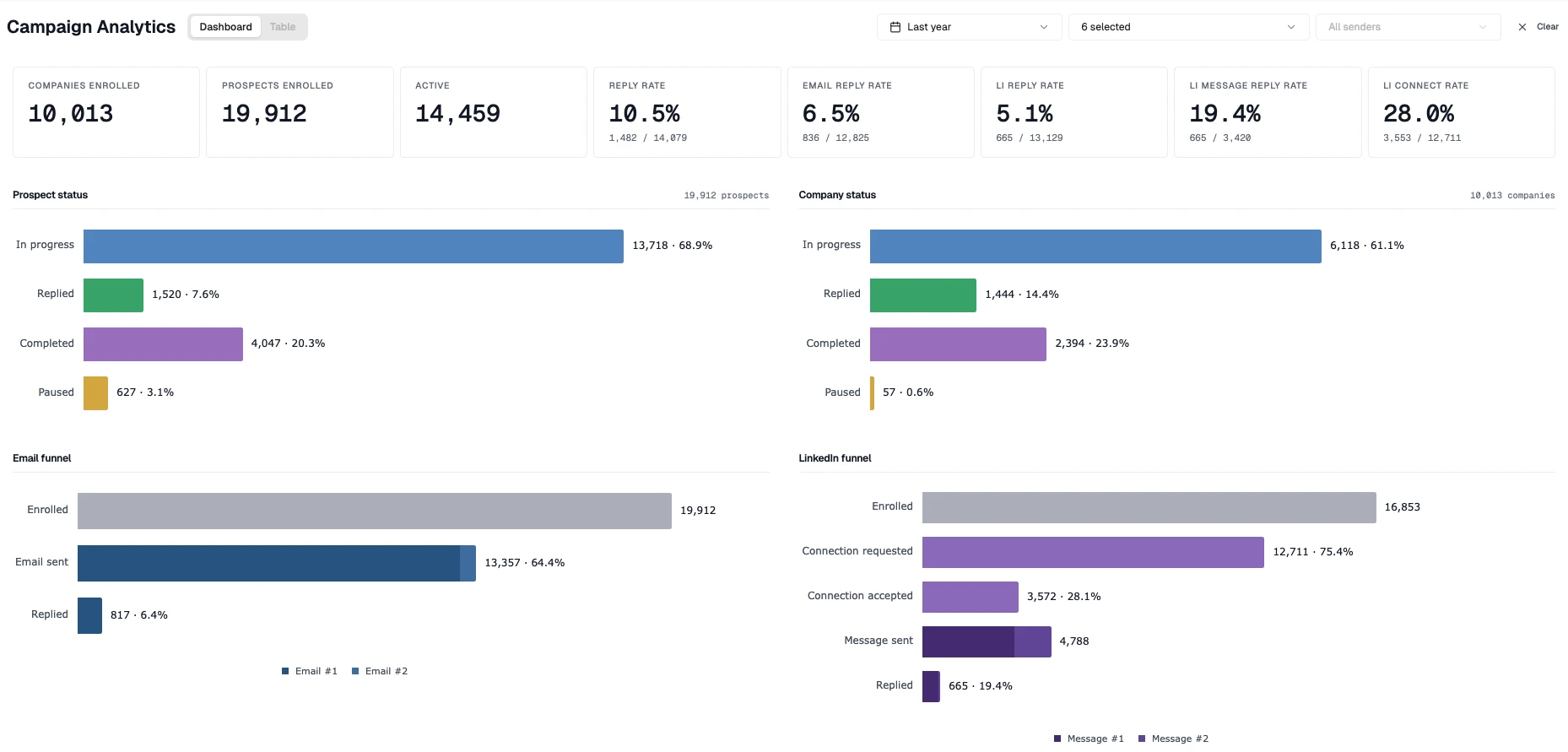
Research time per prospect drops about 84%, and across our and our clients' campaigns that has meant 2.5x meetings booked, with reply rates of 3-7% on email and 16-22% on LinkedIn, in line with what a good human BDR produces. Volume stays deliberately low, because carbon is a small market and a burned reputation follows you for years. It hands off exactly where the last mile ends: when a human replies.
Honest limitation: there's no self-serve login, engagement is custom and pilot-first, and if what you want is to understand the market rather than sell into it, the platforms below are better buys.
2. AlliedOffsets: the deepest buyer record in the market
Best for teams that need the most complete picture of who has transacted, and why.
AlliedOffsets covers 99% of retirement activity across 30-plus registries, 36,000-plus projects, and more than 28,000 corporate buyer profiles, alongside price forecasting, portfolio monitoring, a CDR database, and AIDER, their AI document reader. Their Buyer Lead Generation module, launched in March 2026, filters by location, price, project attributes, and co-benefits, and deliberately surfaces both past purchasers and companies likely to enter the market. Their own framing is that these become "targeted outreach lists," which is accurate about where the product ends.
Where it stops is the list. No decision-maker contacts, no messages, no sending, no follow-up. Pricing isn't published and runs as an enterprise subscription.
This is the platform we most often see on the other side of a client's login, and lists pulled from it seed real campaigns. As a data foundation it's excellent. As a prospecting workflow it's the first step of six.
3. Sylvera: get rated, get listed, get found
Best for developers who want quality credentials and demand-side visibility in the same subscription.
Sylvera's ratings carry weight with the buyers you want, which is a commercial asset before it's a data one. The Buyer Directory covers 39,000 retirees with filters for sector, type, vintage, and geography, market intelligence dashboards track issuance, retirements, and pricing, and Connect to Supply lets developers with existing supply share live offers with buyers browsing the platform, at no cost. If you have credits to sell and no rating, that combination is the cheapest credibility available.
Two limits for prospecting. The directory is company-level, with no contacts and no messaging, and a sequence keyed entirely off the same retirement feed every other developer reads will sound like every other developer. Marketplace listings also only reach buyers who come looking, and plenty of corporate buyers never browse one.
The sensible play is both: get rated, get listed, and run outbound to the buyers who'll never find your listing.
4. MSCI Carbon Markets: the strategic altitude
Best for trading desks, investors, and anyone deciding what to develop or how to price a book over multi-year horizons.
Formerly Trove Research and acquired by MSCI in November 2023, this is the most institutional product on the list. It models future credit demand across more than 5,000 companies, analyzes issuances, retirements, and surpluses, tracks integrity ratings, and publishes forecasts that trading desks use to anticipate client demand and manage risk.
For a seller asking "who do I contact this week," it's the wrong altitude, and it isn't pretending otherwise. There's no contact layer, no outreach, and the license is priced for institutions. Both products read the same signal family, corporate climate commitments. MSCI aggregates them into demand curves. We turn them into campaigns.
5. CDR.fyi: the reference for durable removals
Best for CDR suppliers who need to know exactly who is buying and at what scale.
CDR.fyi is the market's shared source of truth on durable removals, with purchaser leaderboards, deal-level records, and monthly and quarterly recaps. Q1 2026 was the largest opening quarter on record at 2.3 million tonnes contracted, roughly 560% of Q1 2025.
As of April 2026, Microsoft accounted for 78.5% of all disclosed durable CDR tonnes ever contracted. If your commercial plan depends on the leaderboard, your addressable market is about six buyers with a queue outside each one. The pipeline worth building sits in the long tail of corporates making a first thousand-tonne purchase, and they announce intent in a sustainability report months before they reach any deal record.
No contacts, no outreach, and it isn't built for either. Free visibility with a paid Portal, and worth reading whether or not you sell removals.
6. Abatable: pricing intelligence and demand that comes to you
Best for developers and buyers who want structured procurement rather than cold conversations.
Abatable runs RFP processes across a network of more than 5,000 developers, draws on over 600 million offers and transactions annually, and publishes price benchmarks, 13 forward curves across engineered and nature-based projects, and country policy profiles. Access Demand puts developers in front of live buyer requests. Portfolio monitoring and a delivery dashboard handle what happens after contracting.
For pricing a proposal or benchmarking an offer, this is some of the most useful data in the market, and the forward curves are the closest thing carbon has to a financial reference.
As a prospecting tool the direction of travel is inbound: you respond to demand that surfaces, on someone else's timing, alongside every other developer who saw the same RFP. Good channel to have, hard to forecast a quarter on.
7. LinkedIn Sales Navigator: where these buyers actually answer
Best for reaching sustainability and procurement leads on the channel they use daily.
Core runs $119.99/mo, about $89.99 effective on annual billing, for saved searches, lead and job-change alerts, and InMail. In carbon specifically, LinkedIn is where a new Head of Sustainability announces themselves, months before that company shows up in any registry or disclosure database. That's a buying window with a name attached to it.
It supplies no email addresses, no sending, no follow-up, and nothing about carbon. Every step is manual, which is exactly right if you're running a small number of high-value conversations and exactly wrong if you need coverage.
8. Apollo: contacts for the companies registries can't see
Best for reaching the SBTi committer or first-time CDP discloser who has never retired a credit.
Apollo bundles a large contact database, sequencing, and a dialer from $49/user/mo on annual billing, with a usable free tier. When your list comes from a commitment source rather than a registry, this is the cheapest way to turn company names into people you can contact.
Its industry filters bottom out at categories like "Environmental Services," and it has no view of commitments, disclosures, or retirements. Apollo tells you someone's email. Whether their company has a reason to buy this quarter stays your research problem, which is where the hours go.
9. Clay: build the last mile yourself
Best for teams with real RevOps capacity who'd rather own the stack.
Clay does waterfall enrichment across 150-plus data providers and runs Claygent, an AI agent that turns unstructured web research into table columns. The free tier gives 500 actions a month; Launch runs $167/mo (verified August 2026). With enough patience you can approximate a carbon signal stack: scrape SBTi target lists, watch CDP responders, pull registry accounts, score the result.
There are no carbon or ESG datasets in the marketplace, so every signal is one you build and then maintain as source pages change. The learning curve is the platform's most-cited G2 complaint and credit burn is the second.
This is the DIY route to what we sell, and some teams should take it. The ones who succeed have someone whose job this is.
10. The registries themselves: free, and where everyone else starts
Best for teams with more time than budget, and for sanity-checking any list you paid for.
Verra and Gold Standard publish their retirement records openly. You can pull who retired what and when, usually with a beneficiary named on the retirement. Every paid buyer database above is built on top of these feeds, so nothing on this list is showing you data you couldn't reach yourself.
What the platforms sell is the cleanup. Beneficiary fields are free text, so one corporate group turns up under six spellings. Brokers and retailers sit between the registry and the company that wanted the credits. Nothing maps to a company record you can act on without a matching pass. Budget days rather than hours, then repeat it each quarter as new retirements land.
No contacts and no outreach, which by now is the pattern. Pull one export by hand anyway. You'll learn more about how your buyers behave than a dashboard will show you.
The part every list leaves you with
Say you've pulled the perfect filtered list: 200 companies with recent retirements in your project category, matching geography and price band.
Identify who decides at each company, which is rarely one person and rarely the title you'd guess. Find current contact details for each of them. Write something per stakeholder that reflects why that specific company is on the list, because if all 200 messages lean on the same retirement data they read as copy-paste, and buyers in this market compare notes. Send across email and LinkedIn without the two colliding. Follow up on a schedule, several times, for months. Log all of it so the next campaign knows what happened.
Multiply by 200. That's the work, and it's the work small carbon teams skip, which is why a data subscription so often produces a beautiful list and no pipeline.
How to choose
Two motions, and the answer depends on which one you're running.
Low-volume, high-touch, relationship-led. You sell a handful of large deals a year, you know most of the buyers already, and outreach means twenty carefully chosen messages a quarter. A data subscription plus Sales Navigator plus your own hands is a good stack, and it's cheaper than anything automated. AlliedOffsets or Sylvera for the intelligence, LinkedIn for the approach, your judgment for the rest. Genuinely, don't buy an engine for this.
Predictable growth, and campaigns past the registry. You want new conversations every month rather than in bursts after conferences. You want to work lists that no carbon database holds: SBTi committers, first-time CDP disclosers, RE100 members, First Movers signatories, companies whose own reports name a target year. You want conference and event campaigns that reach every contact from the badge scan, not the six you remember. You'd like one system instead of a data subscription, a contact tool, a sender, a LinkedIn tool, and a spreadsheet, and you want the output to read like a good BDR wrote it rather than a template. Then the useful question is which system covers the whole path, and hands over to you at the moment a human replies.
We built Emitree for the second motion, after watching sellers with excellent data spend their week doing the six steps that come after the list.
Test a tool against one real account
Workflow example added September 14, 2026. The vendor prices and market figures above retain their stated research dates.
Before expanding a subscription, take one account your team understands and walk it through the workflow you need. Keep the test small enough that you can inspect every result.
| Step | What to save | What would make the result useful? |
|---|---|---|
| Identify the account | Legal entity, parent group and original evidence link | You can distinguish the actual buyer from a similarly named entity or intermediary. |
| Inspect the signal | Record date, project or credit category, and source | You can explain what happened without treating an old purchase as a current tender. |
| Check the person | Current role, company and the source supporting responsibility | The contact's remit fits the purchasing question you need answered. |
| Review the relationship | CRM owner, earlier conversations and exclusions | Outreach builds on existing context and avoids an active account conflict. |
| Prepare the handoff | Source-backed fit, unanswered questions and one next step | A colleague can continue the work without reconstructing the research. |
For example, a database might reveal a retirement, a professional profile might identify a relevant team, and your CRM might show that a colleague already has the relationship. That is a useful combined result. None of those records, alone, proves a new buying opportunity.
Judge each tool on the part it actually supplies: source coverage, entity accuracy, contact relevance, or the quality of the handoff. Keep unsupported inferences out of the contact record. The selling guide explains the qualification process around those inputs.
If you are preparing for an event, use the carbon-market conference comparison to check the audience and access before building a list. For help combining evidence, contacts and outreach, see Emitree for carbon markets.
Frequently asked questions
How do carbon credit sellers find corporate buyers in 2026?
Three sources, in rough order of value. Commitment data (SBTi validated targets, CDP disclosures, net-zero targets with interim milestones) shows who has an obligation and a deadline. Registry retirement data (AlliedOffsets, Sylvera, CDR.fyi) shows who has already bought, proving budget and process. LinkedIn shows who just took the job that owns the decision. Most teams start with retirements because it's the easiest data to buy, and it's the most crowded.
Is registry retirement data enough to build a prospect list?
It's enough to build a list of past buyers, which every other developer can also build. Retirements fell about 4.5% in 2025 while corporate climate commitments rose 227%, so the companies most likely to buy next are the ones a retirement database can't see yet. Use retirements to confirm budget and process, and commitments to decide who to contact first.
How much do carbon buyer databases cost?
AlliedOffsets, Sylvera, MSCI Carbon Markets, and Abatable all price by enterprise subscription and none publish rates, so budget for a sales conversation. The Verra and Gold Standard registries are free. CDR.fyi offers free visibility with a paid Portal, and Sylvera gives developers with existing supply free access to Connect to Supply. The generic execution tools publish: Apollo from $49/user/mo annual, Sales Navigator Core at $119.99/mo, Clay's Launch plan at $167/mo, all verified August 2026.
What's the difference between a carbon data platform and an AI BDR?
A data platform answers what's happening in the market and who has transacted. An AI BDR takes a definition of a good buyer and runs the sequence: qualification, decision makers, contacts, per-stakeholder messages, multichannel delivery, follow-ups, CRM sync. They stack well, and most of our clients keep both. Our guide to selling to carbon credit buyers covers the motion around them.
Do these tools work for carbon removal sellers?
CDR.fyi is the specialist and worth reading regardless. The structural problem for removals is buyer concentration: Microsoft alone accounted for 78.5% of disclosed durable tonnes contracted as of April 2026. Prospecting for CDR means finding corporates making a first purchase, and those announce intent in reports and commitments long before they appear in a deal record, so commitment-based signals matter more here than anywhere else in carbon.
Can I find carbon credit buyers with LinkedIn alone?
For a small number of accounts, yes, and it's underrated: a new sustainability hire is a buying window, and LinkedIn surfaces it before any database does. It breaks down on coverage. No emails, no follow-up automation, and no way to tell which of 500 companies has an active obligation, so you're back to manual research per account.
Sources
- AlliedOffsets and How to identify carbon credit buyers: database scope, Buyer Lead Generation filters, H1 2026 retirement volumes
- Sylvera - Market intelligence and The developer's guide to finding buyers: Buyer Directory scope, Connect to Supply, developer access
- MSCI - Carbon Markets and MSCI acquires Trove Research: demand modeling across 5,000+ companies, acquisition date
- CDR.fyi - 2026 Q1 durable CDR market update: Q1 2026 volumes, purchaser concentration
- Abatable and Access demand: RFP network, forward curves, transaction volumes
- SBTi - 10,000 company validations: validated target counts and market-cap coverage, early 2026
- Carbon Direct - Key trends in the 2026 voluntary carbon market: 227% commitment surge against falling retirements
- Fastmarkets - Carbon credit demand plateaued in 2025: 2025 retirement volumes
- Apollo - Pricing, LinkedIn - Sales Navigator plans, Clay - Pricing: entry pricing, verified August 2026