How to Sell Recycled Materials and Circularity Solutions
Estimated reading time: 10 minutes
To sell a circularity solution, identify the operating decision your offer can improve. For recycled resin, that might be a material trial at a converter. For packaging software, it might be reconciling supplier data. For reuse, it might be testing the return journey on one delivery route.
Start there. A company's packaging commitment can help you find an account, but your sales team still needs a specific application, an approval process and a workable commercial case.
| What you sell | Qualify first | Who to find | Useful first request |
|---|---|---|---|
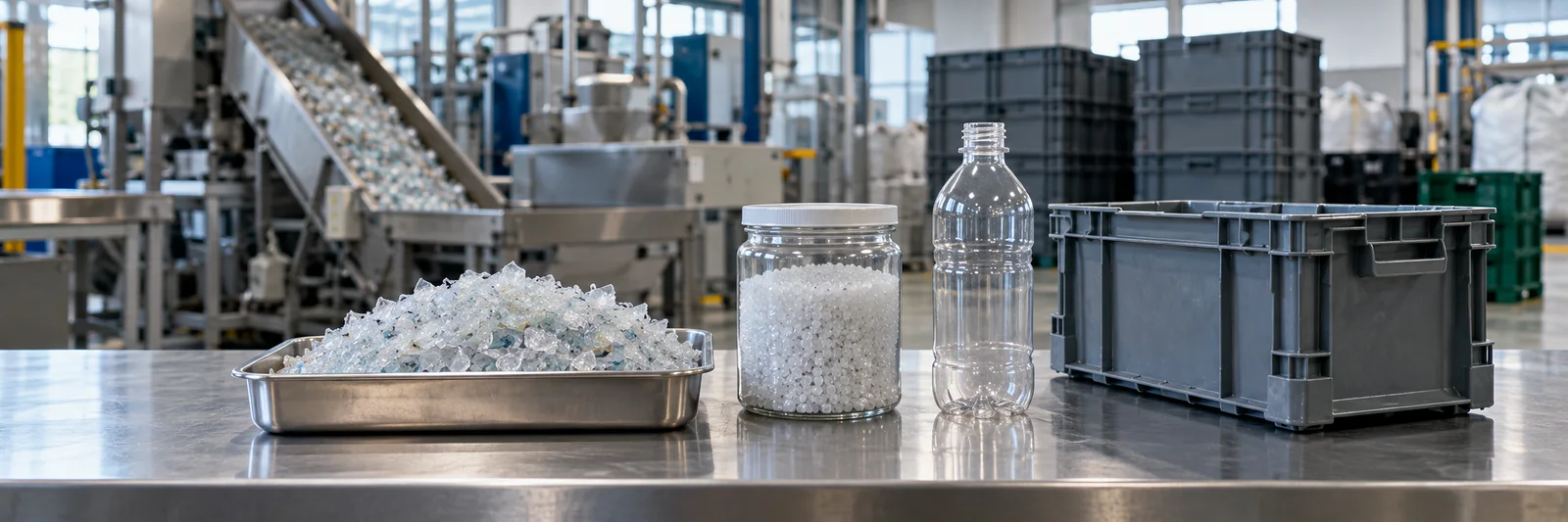
| Recycled materials | Polymer, application, specification, volume and delivery geography | The converter's materials buyer and the brand's packaging team | Permission to compare a specification or arrange a sample |
| Packaging data or EPR support | Obligated entities, packaging records, reporting workflow and existing providers | Packaging compliance, data owners and finance | A review of one packaging family or supplier-data handoff |
| Reusable packaging systems | Route ownership, return points, washing or inspection, losses and operating costs | Logistics, fulfillment, packaging and commercial operations | A feasibility discussion for one route |
For your first campaign:
- Choose one offer and one application in a geography you can serve.
- Find the brand, converter or operating entity that controls the relevant decision.
- Record one verified reason to talk and the information still missing.
- Offer a concrete next step your team can deliver.
- Track progress to trials, accepted data workflows or viable pilots, then to orders.
Where the market stands in October 2026
Packaging policy is creating work, but it is not one uniform buying trigger. The EU's Packaging and Packaging Waste Regulation began applying on 12 August 2026, with requirements taking effect on different dates. In the UK, PackUK's August 2026 operational plan emphasizes data accuracy and recyclability-based fee modulation. Meanwhile, reuse operators are still developing shared infrastructure: an October 2026 New ERA initiative aims to connect e-commerce return networks and labels. The commercial implication is to establish which material, data or operating decision is relevant now, rather than pitch every company against the same regulatory deadline. European Commission, PackUK, New ERA.
Build a market estimate that matches your revenue model
Do not combine all recycling, packaging and waste spending into your total addressable market. Those purchases have different buyers and units.
PackUK forecasts £1.558 billion of fee recovery for 2026–27. That is a scheme funding figure, including disposal costs, administration and impairment. It is not revenue available to packaging software suppliers or resin sellers. PackUK's financial forecasts.
Build three separate models if your company serves all three areas:
| Offer | Addressable unit | Revenue estimate | Main overcounting risk |
|---|---|---|---|
| Recycled material | Eligible tonnes in applications you can supply | Serviceable annual tonnes × your realistic selling price | Counting the same demand at both the brand and its converter |
| Data services or software | Buying entities with a workflow you can support | Eligible accounts × scoped annual contract value | Counting subsidiaries covered by one group contract as separate customers |
| Reuse | Routes or operations your system can serve | Eligible operations × realistic annual revenue per operation | Counting every shipment as an independently addressable sale |
Use customer specifications, supplier directories, company reports, product ranges and your CRM to assemble the account universe. Record the estimation method and distinguish reported volumes from your assumptions. Apply delivery, technical, minimum-order and contract-value filters before assigning revenue.
Keep the full addressable market separate from this year's sales opportunity. An application that could use your resin may remain under an incumbent contract. A retailer with many delivery routes may approve only one pilot.
Follow the material and the responsibility
A brand can set packaging requirements while a converter selects and purchases the resin. Research both organizations. Ask who writes the specification, who performs the trial, who approves a change and who issues the order.
For materials, collect the polymer and grade, processing method, color, odor and contamination requirements, consistency needs, trial process, minimum order and delivery terms. Compare the full delivered offer with the buyer's application. A recycled-content target does not remove performance requirements.
Food contact needs particular care. The FDA's current recycled-plastics inventory records favorable opinions for specific recycling processes, polymers and conditions of use. Check those conditions against the proposed application. A supplier's appearance in the inventory does not establish that every material it sells suits every food-contact use.
For packaging design, use the relevant material stream and current assessment method. RecyClass's March 2026 update changes recommendations for features including inks, closures and barriers. A general “recyclable” description is too broad for a technical sales discussion.
For data services, establish who maintains component weights, materials, supplier records and market allocations. Ask how records move between procurement, packaging teams, external compliance providers and reporting systems. Your opportunity might be an unreliable handoff rather than a missing software product.
For reuse, map the complete journey: dispatch, use, return, inspection or washing, and redeployment. Ask who owns the packaging at each stage, who pays for losses and which return infrastructure already exists. Build a pilot around measurable operating assumptions. Do not promise an environmental improvement without an assessment that fits the actual system.
Keep the jurisdiction attached to the account
| Market | Qualification work | Relevant current evidence |
|---|---|---|
| EU | Identify packaging type, economic operator, applicable requirement and effective date | PPWR application has started, while several provisions phase in later. Commission |
| UK | Establish the reporting entity, packaging categories, data ownership and current provider | PackUK's August plan still describes year-2 fees as indicative and expects notices by the end of November 2026. PackUK |
| United States | Check the actual state, covered products, producer definition and exemptions | Oregon requires covered producers to register, report and pay PRO fees; small-producer exemptions apply. This is an Oregon example. Oregon DEQ |
| Canada | Resolve the relevant province and obligated entity, rather than target only the corporate headquarters | Ontario's producer hierarchy can involve brand holders, importers, retailers, franchisors or marketplace facilitators. RPRA |
Use this research to ask an informed question. Confirm the company's actual obligations and workflow before proposing a compliance service.
Find the people who can approve the next step
| Stakeholder | Decision to establish | Useful contribution |
|---|---|---|
| Packaging R&D or engineering | Specification, component design and validation | A technically relevant specification comparison |
| Converter or materials procurement | Supplier qualification, commercial terms and order placement | Grade, capacity, lead-time and trial information |
| Compliance or EPR lead | Entity scope, reporting method and external-provider responsibilities | A map of the data your service can organize |
| Logistics or fulfillment | Return flow, site operations and pilot ownership | A route-level operating plan |
| Finance, procurement, legal or IT | Investment, contracts, liability, integration and access | Clear scope, assumptions and responsibilities |
Use leadership pages, technical presentations, current roles and supplier relationships to build the first map. Then confirm it with the people involved. A sustainability executive may introduce the project without approving a resin change or a logistics contract.
Work through a real packaging account
Unilever reports 25% post-consumer recycled plastic in its packaging in 2025, within a target scope covering 26 countries and excluding its Ice Cream business. The same page describes Packaging R&D and Procurement working with suppliers on material quality.
That evidence supports researching a materials conversation. It does not identify an open tender, a particular converter's requirements or a future order. A resin supplier should narrow the account to a product application and supply region before approaching anyone.
Illustrative, unsent email from a hypothetical resin supplier. The buyer research above is real:
Subject: Recycled resin specification review
Your packaging update describes Packaging R&D and Procurement working together on recycled resin quality.
We supply recycled HDPE for non-food rigid packaging. Would a specification sheet help your team decide whether a converter trial is worth considering? I can include grade, consistency data and delivery coverage.
The message connects a documented operating activity to something the seller can provide. It asks for a technical decision without pretending a corporate percentage reveals a purchasing requirement.
For cold outreach, test one application and stakeholder group at a time. A packaging-data message should discuss the data handoff. A reuse message should discuss the operating route. Keep technical proof available for the next conversation, and include fresh substance in follow-up messages.
Revive the CRM at the point where work stopped
Sort dormant accounts by the recorded blocker: failed specification, material availability, trial capacity, price, incomplete supplier data or a reuse pilot without a return partner. Check the account owner and contact exclusions before sending anything.
A new public commitment is rarely enough to restart an old technical discussion. Look for the change that could resolve its specific blocker. Update the original information before suggesting another assessment.
Illustrative CRM revival message, using a fictional prior conversation:
Your packaging-data review paused because component weights were missing from two suppliers. Has that information become available?
If it has, we can revisit the sample data map and identify what still needs checking. Would that be useful before your next reporting review?
If the blocker remains, agree whether and when to return. If the project has ended, close it. Retain the reason so another campaign does not restart the same irrelevant conversation.
Prioritize connections that reach the buying process
Build a relationship list around converters, packaging distributors, testing laboratories, compliance providers, logistics operators and existing customers. Give each connection a simple assessment: application fit, access to the responsible team, current timing and reach across suitable accounts.
A converter who can sponsor a material trial may be more valuable than a prominent contact with no role in qualification. A logistics partner with compatible return points may help several reuse accounts pass an operating constraint.
Ask for a specific introduction and supply a short description the introducer can use. Agree customer ownership, competing offers and information-sharing boundaries first. Record introductions separately from direct outreach so you can see which partnerships produce qualified opportunities.
Choose conferences by the conversation you need
Plastics Recycling Show Europe describes a supply-chain audience spanning collection, sorting, recycling and recycled-polymer applications. PACK EXPO International provides packaging and processing exhibitor resources. Use the actual program and directories to distinguish material buyers, equipment suppliers, service providers and potential partners.
Before the event, match accounts to your offer, check the relevant people's roles, and verify attendance separately from exhibitor or speaker listings. Offer a short discussion of a specification, data problem or operating route. Give your attending rep the research and one question to resolve.
Afterward, send the material promised and state the agreed next step. A badge scan is a contact record; a discussion with a trial owner can be a commercial step. Keep those outcomes separate. Emitree's conference outreach service connects event research, pre-event messages and follow-up to the account history.
Measure whether outreach reaches a commercial decision
Define reply rates using unique contacts and a stated period. For email, divide unique replying contacts by unique contacts receiving a delivered message. For LinkedIn, specify the population actually messaged and track connection acceptance separately. Keep positive interest separate from all replies.
| Stage | Record | Decision it supports |
|---|---|---|
| Contact quality | Delivery failures, incorrect roles and referrals | Correct the research or committee map |
| Conversation | All replies and positive replies, each divided by contacts reached in that channel | Assess targeting and message relevance |
| Meeting | Meetings held, separate from bookings | Check whether interest survives scheduling |
| Technical progress | Samples accepted, trials completed, data reviews or agreed pilots | Identify applications that earn buyer effort |
| Commercial progress | Qualified opportunities, quotations, first orders and repeat orders | Assess whether the pipeline is viable |
| Financial outcome | Pipeline value, won revenue, margin and campaign cost | Decide which campaigns to continue |
Tag application, material, geography, stakeholder, offer, campaign and channel. Connect the brand and converter without counting one project twice. Separate prototype quantities from recurring demand, and pilot revenue from an assumed rollout.
Review rejection reasons as closely as replies. If resin prospects repeatedly fail specification checks, tighten qualification. If reuse meetings stall at reverse logistics, change the operating proposal. Compare campaign cohorts with enough time to complete the relevant technical process. The campaign analytics guide explains how to connect those stages to later sales outcomes.
Put a technically capable outreach team beside your sales team
Emitree researches accounts against your exact material, data service or reuse offering. We combine public evidence with the CRM history and private research you share, check relevant contacts, and run email and LinkedIn outreach in your voice. That includes new accounts, CRM revival, partner connections and conference campaigns. Sequences pause when prospects reply, and your reps receive the research and conversation history.
Our proposition is the work of four BDRs across research, qualification, messaging and outreach for the price of one junior BDR. Scope and pricing reflect your markets, offer and workload. Your sales and technical teams handle the conversations, validation and closing.
Emitree reports 3–7% cold email reply rates and 14–22% LinkedIn reply rates across clients' sustainability campaigns. If your campaigns currently return 0.45% on email and 3% on LinkedIn, measured on the same basis, those ranges are roughly 7–16× and 5–7×, respectively. These are all replies, not sector-specific results or positive-reply rates. Compare rates using the same denominator.
Strong outreach starts with evidence of fit. For recycling and circularity, that means checking material specifications, logistics, packaging-data workflows, reuse operations and the people who can approve a trial. That is the preparation an expert BDR would do with enough time to research each account. Emitree makes that preparation the default. Automating delivery does not replace this work.
Dependable sales intelligence should show your rep the source, the application fit and the question still to answer. Campaign reporting should show which materials, segments, regions and outreach approaches deserve more effort. Explore Emitree for recycling and circularity.